

Table of Contents
- Step 1: Turn Graphic Tees Inside Out Before Every Wash
- Step 2: Pick the Best Detergent for Graphic Tees
- Step 3: Set Cold Water and a Delicate Cycle
- Step 4: Skip Fabric Softener and Bleach
- Step 5: Air Drying vs Machine Drying Graphic Tees
- Step 6: How to Remove Stains From Graphic Shirts Without Fading the Print
- Step 7: Store Graphic Tees So Prints Stay Bold
- Frequently Asked Questions
Last Updated: September 10, 2026
Step 1: Turn Graphic Tees Inside Out Before Every Wash
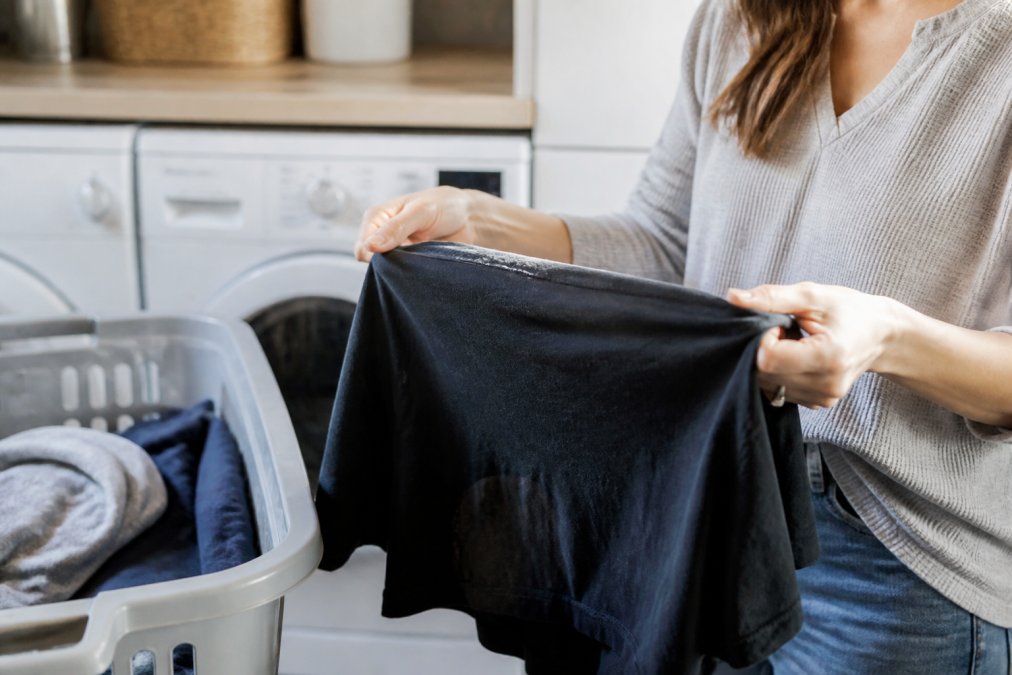
Turning a graphic tee inside out before washing is the single most effective habit for protecting the print, creating a fabric barrier between the artwork and everything else in the drum. This guide from No Safe Tee's walks through the full routine, from sorting to storage.
Most print damage happens through friction: when a decorated shirt rubs against denim, zippers, or other garments, the ink layer takes the hit. Reversing the shirt puts the cotton face of the fabric between the print and the abrasion.
A common mistake is tossing graphic tees into a mixed load straight from the hamper, exposing the design to the roughest part of the cycle.

Here's the sequence:
- Turn the shirt inside out, print facing inward
- Close any zippers on other garments in the load
- Shake the shirt out so it isn't bunched
- Fasten buttons or snaps to prevent snagging
Step 2: Pick the Best Detergent for Graphic Tees
The best detergent for graphic tees is a mild, liquid, color-safe formula with no added bleach or brighteners. Liquid dissolves faster in cold water and rinses cleaner than powder, reducing the detergent buildup that dulls a print over time (cleaninginstitute.org).

Watch the additive list: "brightening" and "whitening" agents lift color, which works against a dyed or printed shirt. Look for a free-and-clear option instead.
A practical comparison:
| Detergent Type | Safe for Prints | Why |
|---|---|---|
| Free-and-clear liquid | Yes | No dyes or brighteners |
| Standard liquid | Sometimes | Brighteners can dull ink |
| Powder | Rarely | Can leave residue in the print |
| Pods with bleach | No | Bleach attacks pigment |
Use the smallest amount that gets the job done, more detergent usually just means residue.
Step 3: Set Cold Water and a Delicate Cycle
Cold water and a delicate cycle do the most work for print durability. Heat is the enemy of both the ink and the cotton it sits on; cold water keeps dye from bleeding and stops the print from softening and cracking (energy.gov).
Set the temperature to cold and the cycle to delicate or gentle, which reduces agitation speed and the friction that wears down a screen print.
Running graphic tees on a normal cycle "just this once" is a mistake: agitation is cumulative, and every high-speed cycle takes a little more off the print.
If your machine has a spin-speed control, drop it to low. Fast spinning is what stretches and distorts the fabric around the artwork.
Step 4: Skip Fabric Softener and Bleach
Fabric softener and bleach are the two products most likely to ruin a graphic tee. Softener coats fibers in a waxy film that traps residue and flattens the ink; bleach strips pigment from both the artwork and the shirt (cleaninginstitute.org).

Softener damage is slow: the shirt feels softer for a few washes, then the design looks hazy, and by then the coating is bonded to the fabric.
Bleach is faster and more obvious, even color-safe bleach can lighten a print, especially on darker garments.
Skip both: mild detergent and cold water handle odor and soil, and a short cold rinse adds more softness than any softener.
Step 5: Air Drying vs Machine Drying Graphic Tees
Air drying is the safer choice for any graphic tee you want to keep looking new. Machine drying exposes the print to heat and constant tumbling, the leading cause of cracking and flaking.
Most print damage happens in the dryer, not the wash: heat softens the ink and tumbling flexes it until it splits.
Here's how the two compare:
- Air dry: hang or lay flat, no heat, print stays flexible
- Tumble dry low: acceptable occasionally, expect gradual wear
- Tumble dry high: avoid, accelerates cracking and fading
Lay graphic tees flat on a drying rack or hang them inside out, out of direct sunlight, since UV fades ink. If you must use the dryer, choose the lowest heat and pull the shirt out while still slightly damp.
Step 6: How to Remove Stains From Graphic Shirts Without Fading the Print
Treat stains from the inside out with cold water and mild detergent, and never scrub directly on the artwork. Working from the back pushes the stain out instead of driving it deeper into the print.
Blot, don't rub. Rubbing spreads the stain and abrades the ink at the same time.
For most fresh stains:
- Flush the area with cold water from the back
- Apply a small amount of mild detergent
- Blot gently with a clean cloth
- Rinse cold and check before drying
Heat sets stains permanently, so never dry a stained shirt until you're sure the mark is gone.
Match the treatment to the stain
Match the treatment to the stain, since the wrong approach can push pigment into the print:
- Oil and grease: Apply a drop of clear dish soap directly to the stain, work it in gently with your fingers, let it sit a few minutes, then rinse cold. Dish soap cuts grease that laundry detergent alone won't lift.
- Protein stains (blood, egg, dairy): Rinse with cold water only. Hot water coagulates protein and locks the stain in. A little mild detergent and a cold soak handles most of it.
- Ink and marker: Blot with isopropyl alcohol on a cotton swab, working from the outside of the stain inward so it doesn't spread. Test on a hidden hem first.
- Deodorant and sweat yellowing: A paste of baking soda and cold water, applied and left for 15-20 minutes, then rinsed cold. Avoid chlorine bleach, which will lighten the print.
The hard-water problem nobody mentions
In hard-water areas, mineral buildup quietly dulls prints. Dissolved calcium and magnesium bind to detergent, forming a curd that settles into the fibers and onto the ink layer, leaving a hazy, chalky film that looks like fading but is residue on top of the print.
Two signs you're dealing with hard water rather than true fading:
- The shirt feels stiff or slightly rough after washing
- White or grayish streaks appear on dark garments
The fix: a whole-house water softener removes the minerals before they reach the washer. Otherwise, use a hard-water detergent with builders that keep minerals suspended so they rinse away, or add a half-cup of distilled white vinegar to the rinse cycle, the acid dissolves mineral deposits and won't harm a cured screen print.
When to give up on a stain
Some stains are permanent: dye-based stains heat-set in a dryer, rust marks, and bleach splashes generally can't be removed without damaging the print. If a stain survives two gentle treatments, stop, scrubbing does more damage to the ink than the stain would.
Step 7: Store Graphic Tees So Prints Stay Bold
Storage is where a lot of slow print damage happens, and it's the step most care guides skip. The right method depends on the print type, since screen, DTG, vinyl, and puff prints all age differently in a drawer or on a rod.
Match storage to the print type
- Screen print: A thick ink layer sitting on top of the cotton. It's the most durable in the wash but the most prone to cracking along fold lines if stored folded on the same crease for months. Rotate the fold line every few weeks.
- DTG (direct-to-garment): Ink bonds into the fibers rather than sitting on top. It feels flush with the cotton and is more forgiving of folding, but it fades faster than screen print under UV light, so keep it out of direct sun.
- Vinyl / heat-transfer: A plastic film adhered to the fabric. It's the most vulnerable to heat and to peeling at the edges. Never stack heavy items on top of a vinyl print, and never store it somewhere warm like an attic or a car trunk.
- Puff print: Raised, dimensional ink. The raised areas flatten permanently under weight. Store puff prints flat and alone, not under a stack of other shirts.
If you're not sure which you have, feel the surface. Ink you can feel sitting on top is screen or puff. A print that feels flush with the fabric is usually DTG. A print with a slightly plastic, uniform sheen is typically vinyl.
Fold, don't hang, and fold the right way
Hanging stretches the shoulders and eventually cracks a print along the fold lines where the hanger pulls; folding keeps the fabric relaxed and the artwork flat. A heavy garment-dyed tee can handle a wide, padded hanger, but folding is still safer for the print.
A storage routine that protects prints:
- Fold with the print facing inward so it isn't rubbed by other clothes
- Alternate the fold line every few weeks so the same crease doesn't crack the ink
- Keep shirts out of prolonged direct sunlight, UV fades ink the same way it fades upholstery
- Store in a cool, dry drawer or shelf; damp basements and hot attics both speed up dye degradation
For long-term storage, a breathable cotton bag beats a sealed plastic bin. Plastic traps moisture, which can lead to mildew and print lifting.
Can a cracked print be repaired?
Once ink has cracked, the split is permanent, no wash routine will fuse it back together. You can only stop it spreading and, sometimes, mask it.
- Stop the spread: Switch that shirt to cold, delicate, inside-out washing and air drying immediately. Cracking accelerates once it starts.
- Vinyl prints: A cracked or peeling vinyl transfer can sometimes be re-pressed with a heat press or an iron on low, using a pressing cloth between the iron and the print. Test on a hidden area first, and never press directly on the vinyl.
- Screen and DTG prints: These cannot be re-fused at home. A fabric marker matched to the ink color can disguise a small crack on a dark shirt, but it won't restore the original finish.
- Puff prints: Once the raised areas flatten, they stay flat. There's no home fix.
Repair is limited, so prevention is the whole game: a shirt washed cold, inside out, and air dried from day one rarely cracks.
Frequently Asked Questions
How do I stop graphic tees from fading?
Wash graphic tees inside out in cold water on a delicate cycle with a mild, color-safe detergent. Skip fabric softener and bleach, and air dry instead of using a hot dryer. Heat and friction are the two biggest causes of fading and cracking, so cold water and low agitation protect the print. Following these steps keeps screen print colors sharp and extends the life of the shirt.
What type of detergent should I use to wash graphic tees?
Use a mild, color-safe liquid detergent that is free of bleach and optical brighteners. Powders can leave residue that dulls prints, so a liquid formula is a safer choice. For the best detergent for graphic tees, look for one labeled gentle or free-and-clear. Add no more than the recommended amount, since detergent buildup traps dirt and can make colors look dingy over time.
Is OxiClean safe for graphic tees?
OxiClean can be safe for graphic tees when you use it as a pre-treatment on stains rather than soaking the whole shirt. Always test it on a hidden area first, like the inside hem. Avoid hot water with oxygen cleaners because heat can set stains and fade prints. For everyday washing, a mild detergent is gentler on screen print and vinyl designs than an oxygen booster.
Should I air dry my graphic tees to prevent cracking?
Yes. Air drying is the single best way to prevent cracking and fading. A dryer's heat breaks down the ink and adhesive in screen prints, which causes flaking over time. Lay the shirt flat or hang it out of direct sunlight to protect the color. When comparing air drying vs machine drying graphic tees, air drying wins for print durability every time.