

Table of Contents
- How to Tell If Graphic Tees Are High Quality: Start With Fabric Weight and Feel
- The Best Fabric for Graphic Tees: Cotton, Blends, and Fiber Composition
- Stitching, Seams, and Construction Quality to Inspect
- Graphic Tee Print Quality: Separating the Shirt From the Print
- Graphic Tee Fit Guide: Shoulders, Sleeves, and Shape Retention
- How to Care for Printed T-Shirts: Controlled Wash Testing and Colorfastness
- How to Judge Quality From Online Listings
- Conclusion
- Frequently Asked Questions
Last Updated: October 15, 2026
How to Tell If Graphic Tees Are High Quality: Start With Fabric Weight and Feel
Most people judge a graphic tee by the design. That's backwards. According to Cotton Incorporated's fabric performance resources, the fabric does more to determine how a shirt wears, washes, and lasts than anything printed on it. At No Safe Tee's, we handle heavyweight, garment-dyed cotton every day, so we've learned exactly where cheap shirts give themselves away. Learning how to tell if graphic tees are high quality comes down to a short list of checks you can run in about 60 seconds. Below, we'll walk through each one, from fabric weight to print durability.
GSM and Fabric Weight Measurement
GSM (grams per square meter) is the metric used to measure fabric weight, and it tells you how substantial a shirt will feel. Lightweight tees land around 4.5 oz, while heavyweight fabric starts near 6 oz.
Here's the quick version:
- Under 5 oz: thin, semi-transparent, prone to stretching out
- 5 to 5.5 oz: the mid-range standard for most retail tees
- 6 oz and up: heavyweight, structured, holds its shape
Our 6.1 oz tees sit firmly in that heavyweight range. Hold a shirt to a window. If you can read a label through it, the fabric is too thin.
Fabric Feel, Thickness, and Drape
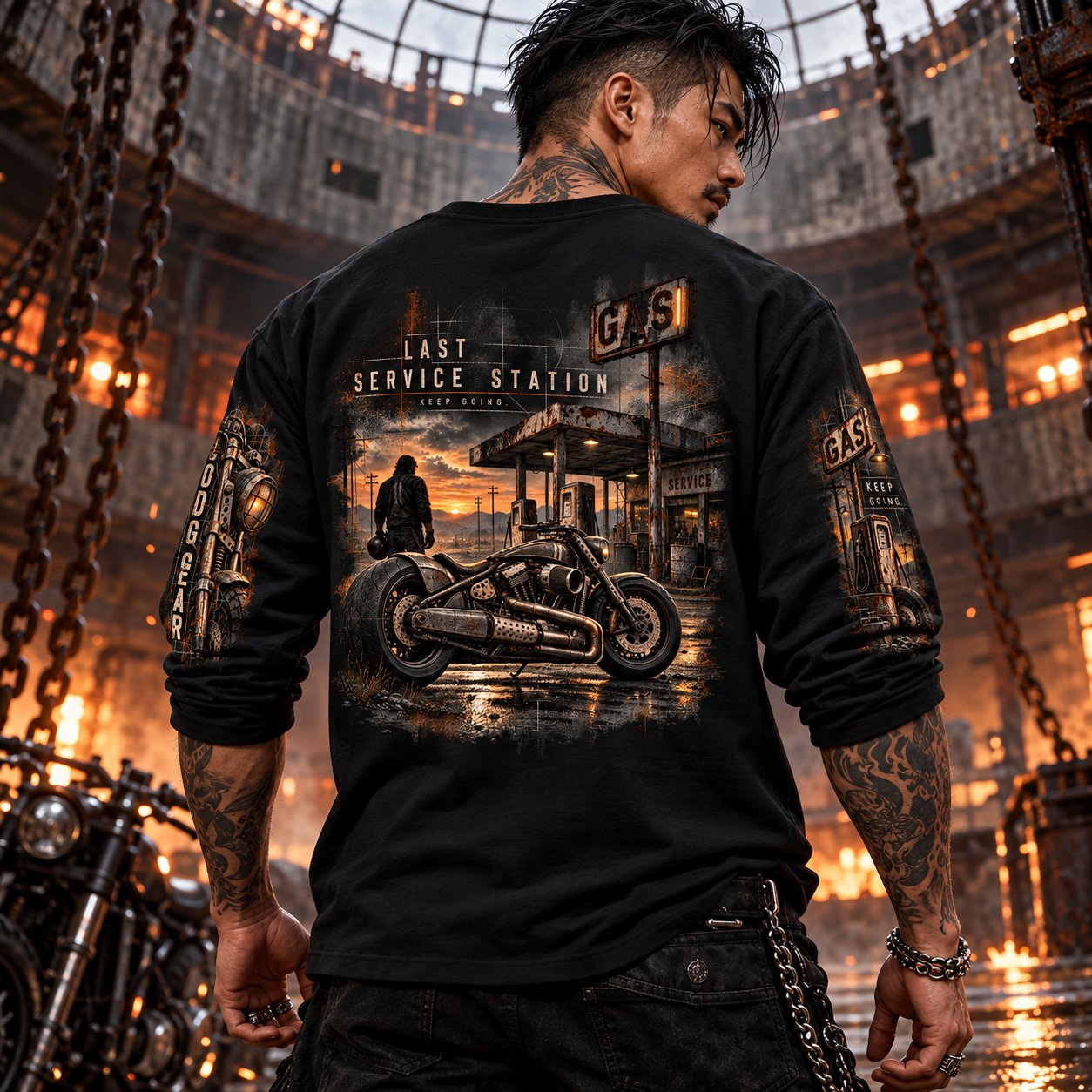
Fabric drape is how a shirt falls on your body, and it separates premium T-shirts from budget ones. Good cotton drapes with weight. It doesn't cling or balloon.
Run your thumb across the surface. Cheap fabric feels slick or papery. Quality cotton feels soft with a slight texture. Garment-dyed finishes add a broken-in hand, which is why our tees feel lived-in from the first wear.
The Best Fabric for Graphic Tees: Cotton, Blends, and Fiber Composition
The best fabric for graphic tees is 100% ring-spun cotton, ideally pre-shrunk, because it takes ink cleanly and resists shrinkage. Fiber composition decides how a shirt ages.
Check the garment label:
- 100% cotton: best print surface, breathes well, can shrink if not pre-shrunk
- Cotton blend (with polyester): less shrinkage, but ink can sit differently
- Tri-blend: soft, but often thinner and less structured
Ring-spun cotton spins the fibers tighter, which makes the yarn smoother and stronger. Our Magic Kit T-Shirt uses 100% ring-spun US cotton, pre-shrunk, so the fit you order is close to the fit you keep.

Stitching, Seams, and Construction Quality to Inspect
Construction quality shows up in the seams and hems, and it's the fastest way to spot a shirt that will fall apart. Flip the tee inside out and look closely.
What to check:
- Stitch density: tight, even stitches beat sparse, loose ones
- Double-needle stitching: reinforces hems so they don't unravel
- Flatlock stitching: smooth, low-profile seams that don't rub
- Tubular knit: no side seams means less twisting after washing
- Ribbed collar: a sturdy collar keeps its shape instead of stretching out
Our tees use tubular knit construction and double-needle stitched seams. A common mistake is ignoring the collar. If it's thin and flimsy on the hanger, it will look worse in a month.
Graphic Tee Print Quality: Separating the Shirt From the Print
Print quality and garment quality are two separate things, and most shoppers confuse them. A great shirt can carry a bad print, and a bad print can ruin a great shirt. Judge them independently, then decide whether the combination is worth the price.
Start with the blank. Check fabric weight, seams, and collar the way you would on an unprinted tee. Then flip the shirt inside out and inspect the print on its own.
Check the print edges first. Crisp edges mean a clean screen or a well-resolved digital file. Blurry or fuzzy edges mean a rushed job or a low-resolution source image. Then look at ink coverage. Thick, even ink holds up. Thin, patchy ink fades fast. Finally, check the hand, the way the print feels against your fingers.
Print-Method Trade-Offs for Different Graphics
No single print method is best for every graphic. The right method depends on the artwork, the run size, the fabric, and how long you expect the print to last. Here is how the common methods compare.
Print Method |
Best For |
Durability |
Feel |
Typical Failure Mode |
|---|---|---|---|---|
Screen printing (plastisol) |
Bold, simple designs, larger runs |
High |
Slight texture, sits on fabric |
Cracks if over-cured or stretched cold |
Screen printing (water-based) |
Soft-hand prints, vintage looks |
Medium to high |
Very soft, sinks into fabric |
Fades gradually rather than cracking |
DTG (direct to garment) |
Detailed, full-color art, small runs |
Medium |
Soft, thin |
Fades and dulls with repeated washing |
Heat transfer / vinyl |
Small runs, names, numbers, photos |
Lower |
Can feel plasticky |
Peels at edges, especially after hot drying |
Discharge |
Vintage, faded looks on cotton |
Medium |
Barely there |
Limited to certain dye colors; can weaken fabric if over-applied |
Sublimation |
Polyester and high-poly blends |
High on polyester |
Smooth, no hand |
Will not bond to 100% cotton |
A few practical rules follow from that table. If you want a printed graphic that lasts years on a cotton tee, screen printing, especially water-based, on heavyweight cotton is the safest bet.
Magic Kit T‑Shirt — Vintage Epstein Illusion Retro Trick Poster Tee →
One more thing to check: print placement and registration. On a multi-color screen print, the colors should line up cleanly with no gaps or overlaps. On a DTG print, the white underbase should not peek out around the edges of the design.
Graphic Tee Fit Guide: Shoulders, Sleeves, and Shape Retention
A graphic tee fit guide starts at the shoulders, because that's where shape retention begins. The shoulder seam should sit at the edge of your shoulder, not hang past it or pull inward.

Then check the sleeves and body:
- Sleeves: should end mid-bicep, not pinch or flare
- Body: relaxed but not boxy, with room to move
- Length: hits at the hip, not past it
Shrinkage matters here. Pre-shrunk cotton holds its size. Unwashed cotton can shrink a full size after one hot wash. Our Magic Marker tee is pre-shrunk and cut for a relaxed fit, so it stays true to size.
How to Care for Printed T-Shirts: Controlled Wash Testing and Colorfastness
How you care for printed T-shirts decides whether the print survives. Colorfastness and wash durability are testable, and you can run a simple controlled wash test at home. The key word is controlled: if you change several variables at once, you will not know what caused the failure.
Set a Baseline Before You Wash
Before the first wash, photograph the shirt in flat, even light. Capture the full front, a close-up of the print edges, the collar, and the hem. Note the measurements: lay the shirt flat and measure chest width (armpit to armpit), body length (high point of shoulder to hem), and sleeve length. Write those numbers down. Without a baseline, you cannot tell whether the shirt shrank or you just remember it differently.
Run the Controlled Wash Test
Wash the shirt alone or with similar colors, cold, and inside out. Use a normal amount of detergent, not extra, and skip bleach and fabric softener. Fabric softener leaves a residue that can dull prints and reduce absorbency. Tumble dry low, or hang dry if you want the most conservative test. Then check four things against your baseline:
- Color: did the ink fade, bleed, or shift hue? Compare to your photo under the same light.
- Print edges: did they crack, peel, or lift? Run a fingernail gently along an edge.
- Shirt shape: did the collar stretch, the hem twist, or the body shrink? Re-measure and compare.
- Surface: did the fabric pill, fuzz, or feel rougher than before?
Repeat for five washes, checking after each one. A quality print barely changes across five cycles. A cheap one often shows cracking or edge lift by wash three. If the shirt fails at wash one, the problem is usually the print method or the cure, not your washing machine.
What Each Result Tells You
The failure mode points to the cause. Cracking along the print usually means the ink was under-cured or the print was stretched cold. Peeling at the edges usually means a heat-transfer or vinyl print that did not fully adhere. Fading without cracking usually means a DTG or water-based print doing what it is designed to do, soften and lighten over time. Collar stretch and hem twist usually point back to the blank, not the print, which is why you should judge garment and print quality separately.
Everyday Care Rules That Follow From the Test
Once you know how your shirt behaves, the care routine is simple. Wash cold, inside out, with like colors. Skip bleach and fabric softener. Tumble dry low or hang dry. Do not iron directly on the print, if you must press the shirt, turn it inside out or use a pressing cloth. Avoid dry cleaning, which uses solvents that can break down some inks. Our care instructions follow the same rules: cold wash, low heat, no bleach, no dry cleaning.
How to Judge Quality From Online Listings
You can judge quality from an online listing if you know which details to look for. Most listings hide the specs that matter, so scan for these:
- Fabric weight: look for "6 oz" or "heavyweight"
- Fiber content: "100% ring-spun cotton" beats vague "cotton blend"
- Construction notes: "double-needle," "tubular knit," "pre-shrunk"
- Print method: named methods beat "printed graphic"
- Real customer photos: reviews with photos show how prints age
If a listing skips all of these, that's your answer. Our Good Ideas Grow Here tee lists its 6.1 oz weight, ring-spun cotton, and double-needle stitching up front, so you know what you're buying.
Conclusion
The difference between a shirt that lasts and one that fades by summer comes down to fabric weight, seams, and print method, not the joke on the front. No Safe Tee's builds every tee on 6.1 oz ring-spun cotton with garment-dyed finishes, tubular knit construction, and double-needle stitched seams that hold up wash after wash. Browse the full collection and grab a graphic tee that keeps its shape, its color, and its punch.
Frequently Asked Questions
How can you tell if a T-shirt print will crack or fade?
Stretch the graphic gently at the edges and look for a matte, evenly cured ink layer. If the print feels like a thick rubber patch, it will likely crack. Check that the ink has soaked into the fabric rather than sitting on top. After washing inside out in cold water and tumble drying low, a quality print should stay smooth with no peeling or fading.
What fabric weight is best for a durable graphic T-shirt?
Heavyweight fabric in the 5.5 to 6.5 oz range (roughly 180 to 220 GSM) holds prints better and resists stretch. Lightweight tees under 4.5 oz tend to show ink cracking sooner. No Safe Tee's uses a 6.1 oz, 100% ring-spun cotton body that keeps its shape and print clarity through repeat washes.
Is 100% cotton or a 50/50 cotton-polyester blend better for a graphic tee?
100% ring-spun cotton gives the softest hand and best ink absorption for screen printing, but it can shrink slightly. A 50/50 blend resists shrinkage and wrinkles, yet the polyester can make prints feel slicker. For graphic tees with detailed artwork, cotton or a cotton-dominant blend usually produces sharper print edges.
How should a graphic tee fit at the shoulders and sleeves?
The shoulder seam should sit at the edge of your shoulder bone, not hang past it. Sleeves should end mid-bicep and not pinch when you raise your arms. If the shirt rides up and exposes your stomach when you lift your arms, the body length is too short. A relaxed fit like the 6.1 oz tees from No Safe Tee's keeps its shape without pulling.